
on what I’d want to take away from high school
thinking back to being 17: friendships, family, figuring yourself out, and the things that stay when everything else shifts

Last year I was invited back to speak on a panel at my high school. Walking through the hallway beforehand, I was struck by how familiar it all still was – I knew how the shadows fell through the glass at different times of day, the echoing sound of the doors opening and closing. The school bell rang and I was seventeen again. The building was filled with kids I didn’t know, but they kind of looked like my friends, walking the same routes we used to walk with backpacks too big for them.
The panel was about career paths, but I kept thinking about what I actually wished I’d known at that age. It wasn’t about careers.
It’s easy as an adult to forget what it actually felt like to be a teenager – the intensity, the uncertainty, the way everything felt like it mattered so much. I try to hold onto that perspective rather than view it through the comfortable distance of adulthood.
A lot of people lament how useless high school was, how inapplicable to the real world. I don’t feel that way. I got a lot out of high school. It was competitive, teachers held us accountable, and when I got to college, I realized we all knew how to write much better than our peers. But what I really got out of it wasn’t the stuff that shows up on a resume.
The skills that mattered were subtler, and they’re not things you finish – they’re orientations, directions you point yourself in and keep working on. Developing a curiosity about who you are and who you want to become. Building real friendships and learning what it means to actually be a friend. Accepting your parents as people doing their best with their own limitations. Getting comfortable with risk and failure – not failure from lack of effort, but failure as the byproduct of going for something. You won’t have any of this sorted by graduation. The point is deciding these are things worth thinking about and working on.

I played a lot of sports growing up – baseball, basketball, some soccer. I formed a self-identity around them and felt most like myself on the court or field, surrounded by my friends. Then, freshman year I fractured two vertebrae playing basketball and spent a year in a back brace. It’s a longer story, but it changed how I spent my time. I couldn’t play sports. I thought more deeply about things. I wrote more, I self-reflected more, I listened to music constantly. I started thinking about what kind of person I wanted to be and what life I actually wanted. I didn’t choose to slow down – it was forced on me. But something valuable came out of it.
After I recovered, I played sports again, drove around with my friends, caused minor mayhem, made music, and pulled pranks. I spent an absurd amount of time on AIM, on emo and punk message boards, trading hip hop b-sides and hunting down rare freestyles in online groups. I cared about being smart and being perceived as smart, and about getting good grades – partly because I liked learning, but also because grades were something I could point to, a way to validate myself to others and to adults. School rewards execution: do the thing well, get the grade. I was good at that. I was certain about lots of things but more importantly, curious about what I didn’t know.
I cared immensely about where I went to college. Most people at my high school did. It felt like this key inflection point of my life, where you could hold up all the stuff you’ve done and the person you are up to that point, and be evaluated to see if you’d done enough to have that future you wanted. There’s so much identity formation in such a short period of time that it’s easy to lose sight of yourself and what’s important to you, and instead lean on what you think other people value.
I wanted the opposite of an idyllic California suburb. I wanted a city, specifically New York. Concerts, chaos, staying up all night running around a city with unlimited possibility, becoming as worldly as I imagined I could be.
The toughest part of the first few months of college for me wasn’t the classes or the independence. It was not having the intimate friendships of high school – people who really knew me, who I could be fully myself around – and rebuilding that from scratch. It made me appreciate how much those relationships mattered. The older I get, the more I’ve come to realize that nothing matters more than your people.
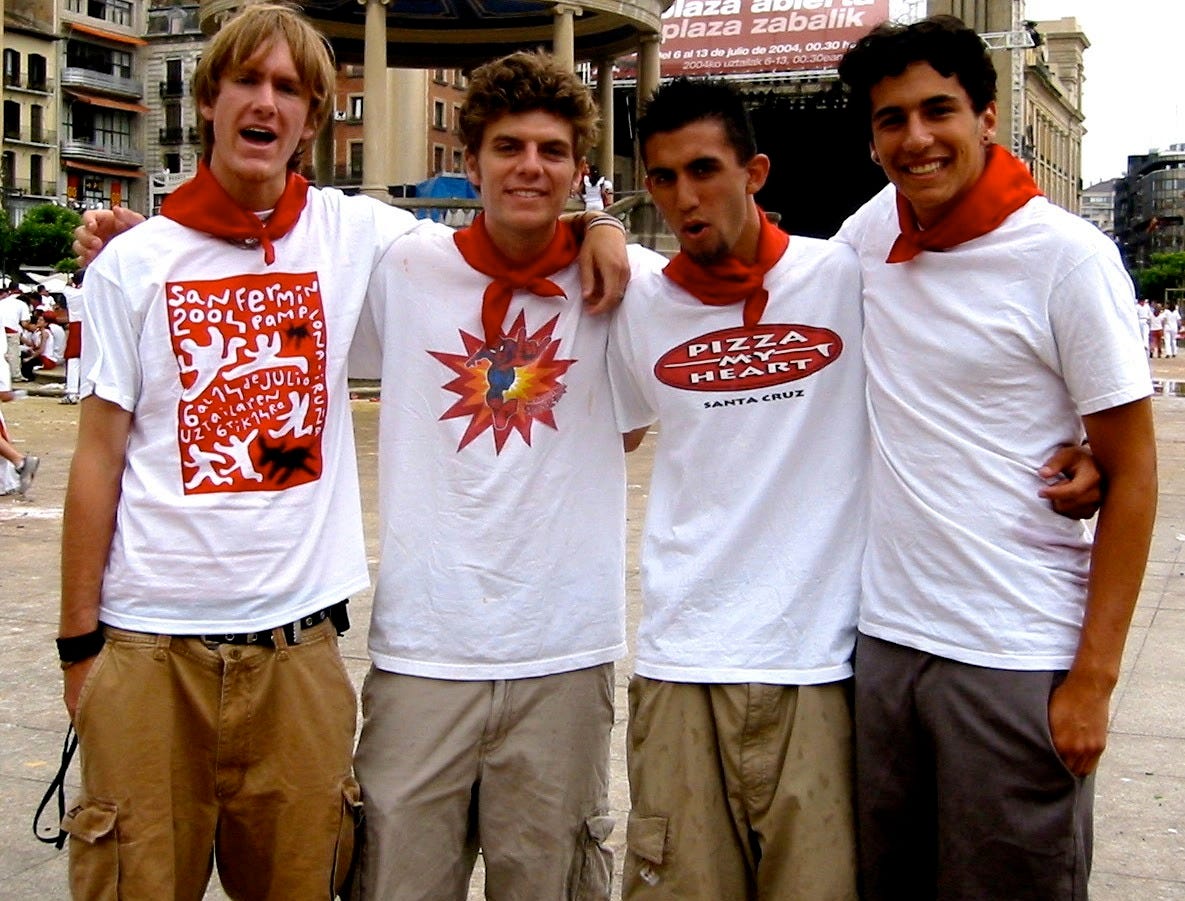
Some of my closest friends are people I met in 6th grade. We’ve got a group thread where we’ll rib someone for something from a decade ago. I talk to my best friend on the phone every week – we’ve been friends for almost thirty years. That doesn’t just happen. It takes two people who want to keep it going.
Not everyone finds their people in high school. I’ve made close friends since – in college, at jobs, grad school, and in random circumstances I couldn’t have predicted. The point isn’t where or when you find them. It’s understanding what real friendship looks like and how to be a good friend yourself, and continuing to make that a priority.
The friends who’ve mattered most to me are the ones whose opinions I actually trust. People who know me well enough to call me on my stuff, and where the relationship is strong enough to survive it. People who root for me, who genuinely feel good when something goes well. I’ve learned to be careful with friendships where there’s envy on either side – mine or theirs. It limits how deep things can go, even if you don’t notice at first. I’ve seen friendships stall out because the people in them were competing more than they were supporting each other. If you feel like you can’t be fully yourself or honest with a friend, that tells you something about what kind of friendship it is. Not everyone has to be a best friend.
I’ve learned to value repair. I’ve been in fights with close friends. People have cried. We’ve misunderstood each other and said things wrong. What mattered was whether we both wanted to fix it. Seeing their perspective didn’t mean abandoning mine. The friendships that have lasted aren’t the ones without conflict. They’re the ones where people kept showing up after.
I have great parents. I feel lucky about that. But even with great parents, there’s this thing where you assume you’re the center of their attention, so any mistake they make feels intentional. A rule that seemed unfair, something they didn’t understand about you – it’s easy to read that as carelessness or worse.
My parents are people trying their best. They were figuring it out too. They had their own histories, their own limitations. They got things wrong. The faster I let go of expecting them to be perfect, the faster I could have empathy for them – and stop holding onto stuff that would otherwise sit there for years. I’ve seen people not realize their parents are people until they’re well into adulthood, and by then it’s devastating. Years of resentment to untangle, relationships that calcified while they waited.
I want to be clear: there are situations where cutting off a parent is the right call. Abuse, real harm, things that can’t be undone. I’m not talking about those. I’m talking about the more common thing – parents who disappointed you, who didn’t get it, who made bad calls. That’s not the same. Extending grace got easier for me once I realized they were never going to be perfect and weren’t pretending to be.
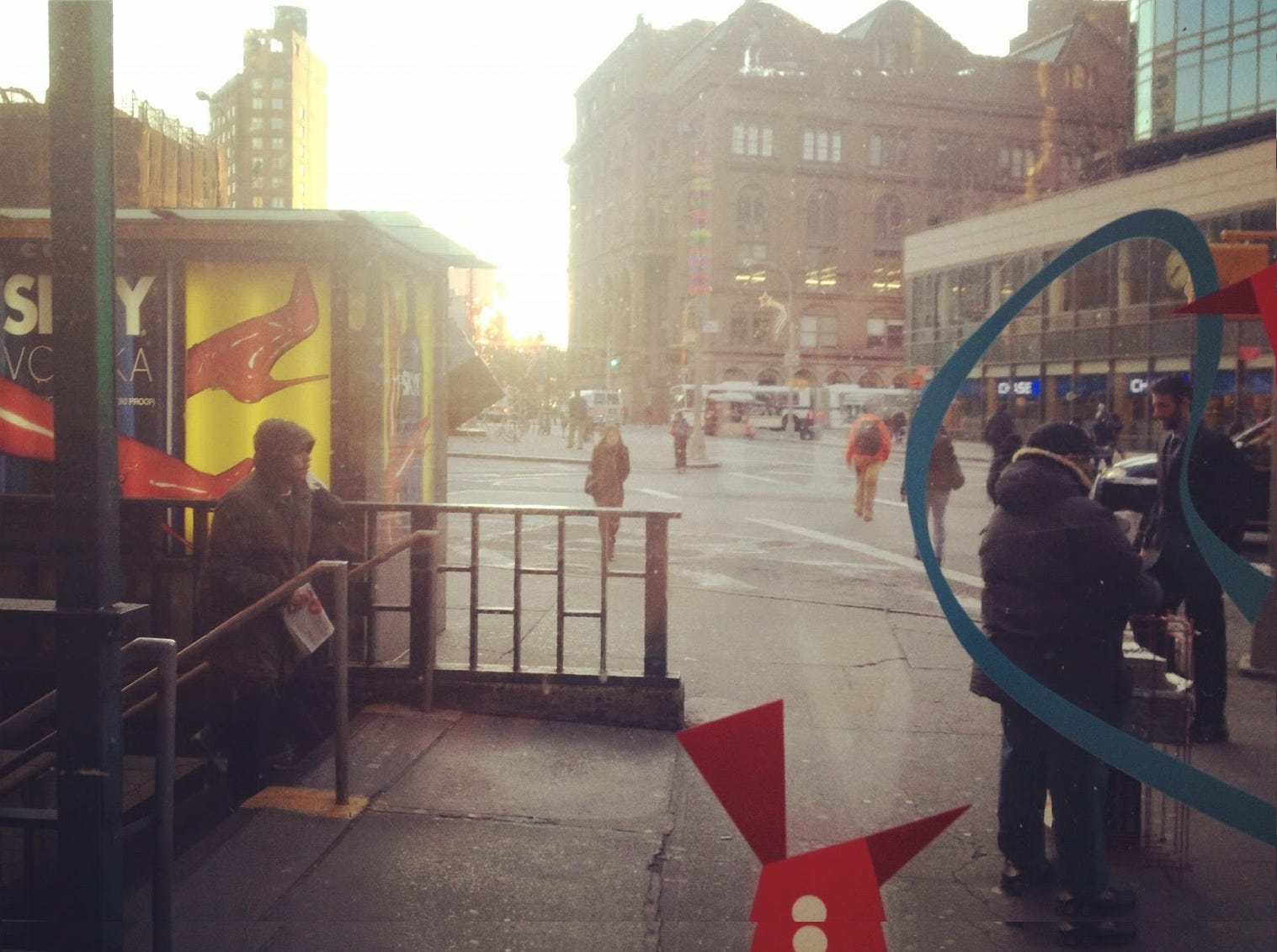
I used to take long walks at night in college. Get some air, sit in an all-night diner with a notebook, ride the subway and just think. Not a structured practice – just time away from screens, letting things turn over.
Self-reflection on its own matters, but it’s a force multiplier when paired with close friends you can compare notes with – people you can be your real, unfiltered self around. I’d talk honestly with them about what I was working through. With them I could let go of the version of myself I performed for everyone else. They’d call me on my blind spots. I’d do the same for them.
Real self-reflection isn’t journaling because someone told you to. It’s honest examination of who you are, what you want, and where you’re falling short. You won’t always like what you find. That’s the point.
The goal isn’t to lock in some fixed identity at seventeen. It’s to build a sense of self that can bend without breaking. That starts with being curious about yourself – genuinely curious, even when the answers are uncomfortable. Especially then.
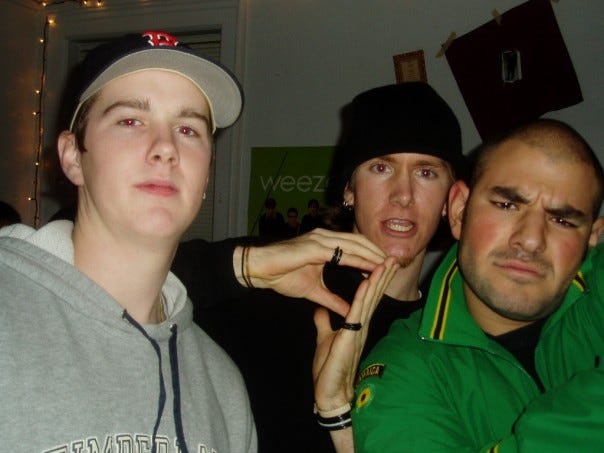
College is a strange window. More optionality than you’ll probably ever have again, and the cost of trying things is as low as it gets. You’re not going to get fired. You’re not supporting anyone. The stakes on any individual experiment are tiny.
I had a radio show. We bought bikes and futons off Craigslist and flipped them at the end of each year. I taught myself to produce and record music, made a bunch of friends doing it, and recorded an album in my dorm room with a $50 mic and extra mattresses propped up as a makeshift recording booth. None of it became a career. That wasn’t the point. I was trying things, getting comfortable being a beginner, making stuff with friends, and figuring out what I actually liked versus what I thought I should like.
I joined clubs, talked to people I wouldn’t have otherwise, took classes outside my comfort zone. Some of it went nowhere. Some of it stuck. If I’d been too locked into who I thought I was at eighteen to try anything outside that identity, I would’ve wasted the window.
Since high school I’ve tried a lot of things. I’ve made a ton of mistakes. Projects that failed, relationships that didn’t work, ideas I started on that went nowhere. The act of doing things is messy – messier than anyone makes it seem, messier even than we remember it ourselves. It’s not clean and it’s not easy, and it’s not supposed to be.
At eighteen, I thought consistency was a virtue. Changing your mind meant you’d been wrong, and being wrong meant weakness. That’s a problem if you’re interested in growing. Perspectives change. What lights you up will shift. The stuff you refuse to examine doesn’t go away. It calcifies. And the longer you wait, the more painful it is to face.
Here’s something I didn’t learn until later: life gets less prescriptive as you go. In high school, you mostly take the same classes as everyone else. Read this, write this paper, take this test. Execution is what’s rewarded. But the further you get – into your career, into adulthood – the more you’re choosing what to execute on. No one hands you the syllabus. That can be jarring for a type A person who’s excelled their whole life under one system, and then it changes. If you’ve never practiced making choices, never gotten comfortable being wrong and adjusting, you’ll keep waiting for someone to tell you what to do.
A lot is going to change. Where you live, what you do, who you’re around. Most of it you can’t predict. The world won’t rearrange itself for you.
Standing in that hallway again, I’m grateful for what that place gave me. I’m also glad I don’t carry the uncertainty of being a teenager anymore – the weight of everything feeling like it matters so much, before you have any evidence things will work out.
That’s what I wish I had heard at that age. Be curious about who you are, even when it’s uncomfortable. Learn what it means to be a real friend and find people worth showing up for. See your parents as people before resentment sets in. Take risks, fail at things, and get comfortable with the mess. These aren’t things you master by graduation – they’re directions you point yourself in. When everything else shifts, your sense of self and your people are what stay. Nothing matters more.

what a lovely read, thank you!